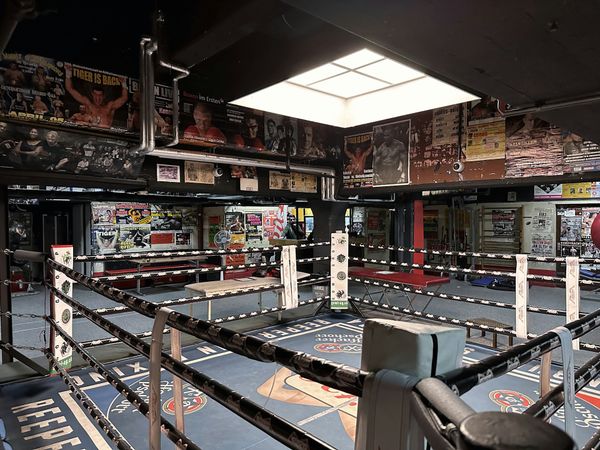
The Counterpuncher Syndrome: Why Your Team Struggles to Innovate

In their historic trilogy of fights, Muhammad Ali demonstrated the art of counterpunching: neutralizing Joe Frazier’s attacks, then turning them into devastating blows of his own. Many organizations face similar team innovation challenges: waiting for others to make the first move, then responding with precision strikes aimed at exposing weaknesses rather than initiating bold ideas of their own.

But in organizations, counterpunching does more than deflect. It wears down the very people who generate ideas, training natural initiators to stop coming forward. Over time, even aggressive innovators learn to keep their guard up and wait, leaving companies full of Ali-style counterpunchers but few Frazier-style aggressors willing to take risks.

I call this the counterpuncher syndrome: a mindset that shapes behavior at every level of organizational life. It helps explain why innovation initiatives so often falter despite loud commitments to creativity and growth.

The Meeting Room Reality

Nowhere is the syndrome more visible than in meetings. A familiar choreography plays out: someone shares an idea, and within seconds the critiques arrive. Proposal collapses into postmortem before it has had the chance to breathe.

The implicit norm is “no, but”, a reflexive counterpunch that halts momentum. Contrast this with the “yes, and” of improvisational theater, where ideas are extended before they are judged.

Structures reinforce the pattern. Agendas allocate “discussion time” that becomes de facto criticism. Decision criteria emphasize risk avoidance over opportunity creation. Even the table itself can feel like a boxing ring, where ideas are opponents to be defeated rather than possibilities to be developed.

The result: meetings function less as generative spaces and more as arenas of evaluation. Only ideas backed by extraordinary confidence or power survive their first round, which makes innovation the exception, not the norm.

The Individual Manifestation

At the personal level, the syndrome often sounds like: “I’m not creative.” That phrase rarely points to innate limits. More often, it reflects a mindset trained by systems that reward critique over creation.

We’ve schooled and socialized people to excel at flaw-finding while leaving their generative muscles underdeveloped. Professional identity becomes defined by what one prevents rather than what one proposes, measured in problems avoided rather than possibilities realized.

The Parasitic Nature of Pure Critique

Criticism without contribution is essentially parasitic. Like a leech, it feeds on the vitality of others’ ideas but produces no life of its own.

Teams that excel at problem-spotting but stall when asked for solutions become organizational drags rather than drivers. Critique may expose weakness, but without generation, there is nothing left to strengthen.

Cultural Origins and Reinforcement

This orientation runs deep in management culture. Systems are built to prevent loss, not foster gain. Risk registers are meticulously maintained; opportunity inventories rarely exist. We celebrate “failing fast” more than “discovering rapidly.” We conduct postmortems, not growth analyses.

Our very vocabulary skews defensive. And that language shapes systems, which then shape behavior, creating a self-reinforcing cycle where counterpunching becomes the default stance.

Misunderstanding Critical Thinking

Organizations often mistake criticism for critical thinking. True critical thinking examines an issue from multiple angles: testing assumptions, recognizing patterns, weighing evidence, and imagining alternatives. Criticizing, by contrast, is narrow: it spots weaknesses without balancing them against strengths or possibilities.

This slippage allows leaders to claim they prize “critical thinking” while presiding over cultures hostile to new ideas.

Beyond Binary Thinking

Escaping the counterpuncher syndrome doesn’t mean swinging to the opposite extreme. Blind optimism is as unhelpful as reflexive critique. The task is to integrate both: to create deliberate sequences where ideas are generated before they are evaluated, to balance offense with defense, to enrich our vocabulary of possibility alongside our vocabulary of risk.

It means treating paradox as a feature, not a flaw: seeing creativity and critique as complementary modes rather than competing ones. And it means asking who holds the initiative, not just who has the sharper response.

The Choice

Counterpunchers excel at responding to what others create. But who’s creating what they respond to?

So the question for teams and organizations is this: are you content to keep counterpunching, or are you ready to name what could be and summon the courage to build it?

==

photo by Rikin Katyal on Unsplash


Keep it on the one: From funk to management

I sometimes close my newsletters with the expression: “keep it on the one.”

Some of you have asked what it means. Others have asked how a phrase rooted in music applies to the craft of management.

So here’s a short reflection on both.

The musical foundation

“The one” refers to the first beat of a 4/4 time signature. Think of it simply as the one, two, three, four count that underlies much of Western music. James Brown would tell his band to “hit it on the one,” emphasizing that first beat hard, anchoring the groove so everything else could lock in around it.

What I grew up with was mostly jazz, where the groove works a little differently. The bass lays down the one and the three; my guitar came in on the two and the four. That gave us a pulse—boom, clap, boom, clap—a conversation between instruments. Once that back-and-forth is in place, everything else can layer in. The horn section, the keys, the percussion, each doing their own thing, but all staying grounded.

It’s not uncommon in a tune to have the bass lay out the foundation on the one and three for a while before the rest of the rhythm comes in.

You can drift in and out of solos, experiment with voicings, stretch the phrasing. But if you ever get lost, you just listen for the one.

That’s where you rejoin the groove.

The management connection

The same holds true in management.

Just as musicians need a shared pulse to stay in the pocket, teams need a clear, dependable reference point, something that centers them.

In practice, keeping it on the one means establishing and sustaining the fundamental rhythms that hold a team together. The values you live by. The priorities you return to. The cadences you maintain. What that looks like will differ from one team to the next.

When projects get complex or improvisation runs wild, or when a new player joins the ensemble, it’s those fundamentals that help everyone find their way back into sync.

It’s not about rigid structure. It’s about shared rhythm.

It’s what allows people to play differently without falling apart.

That’s why I say “keep it on the one.”

It’s a reminder, for myself and for you, to stay grounded. To stay in time with what matters. To keep the rhythm that makes both structure and creativity possible.

Because great performance, whether in music or management, is never just about the solo. It’s about staying connected to the groove we build together.

==

Keep it steady. Keep it human. Keep it on the one.


Introducing: Behind the Scenes

I spend a fair amount of time rereading what I’ve written—to understand how my thinking holds together and where it might be heading next. How do ideas I explored months ago connect to what I’m circling now? What threads have I been following without realizing it? Where did a particular angle actually come from?

It’s a way of making sense of my own thinking. But I’ve started to wonder if others might find that process interesting, too.

So I’m starting a monthly-ish Behind the Scenes series where I share some of that reflection. The first one looks at how my recent essay, What You Lose When You Lead, fits within the larger conversation I’ve been building about management and leadership. How ideas about craft, exemplarity, and human motivation have been circling each other in my work, converging around one of the most misunderstood transitions in professional life.

The weekly newsletter stays just as it is: free and open to everyone. This is simply the thinking I’d be doing anyway, made available for the cost of a coffee if you’re curious to come along. Most Behind the Scenes entries will be for paid subscribers, though I’ll share one with everyone from time to time when it feels right.

If that’s not your thing, no worries. Nothing changes. The main conversation continues every week, just as it always has.

I’ll send the first one tomorrow.