A Quiet Recognition

That day, reflecting on how my simple gesture toward the staff was read as a tactical maneuver, I realized something more profound was at stake. It wasn’t about strategy but about bond—the quiet recognition of our shared humanity, too often hidden beneath layers of hierarchy and suspicion. When respect becomes rare enough to seem like a tactic, we lose sight of something fundamental: the dignity we hold simply by being human.

Their assumption revealed the narrow frame through which many now view relationships at work—a transactional mindset that mistakes genuine recognition for calculated gain. But respect isn’t something earned or used. It’s the baseline of connection, quietly present before roles, titles, or behavior.

The poem below tries to name that respect in its purest form—a recognition that neither waits for permission nor demands reward. It’s a reminder of what we often forget but need most.


A Quiet Recognition

Every person
carries inherent dignity—
not earned through good behavior,
forfeited by mistakes,
or shaped by circumstance.

It’s simply there,
by virtue of being human.

Respect
is the quiet recognition
of that dignity.

Kindness is different.
It’s something we offer
freely, personally.

Kindness flows from your generosity;
respect,
from their humanity.

==


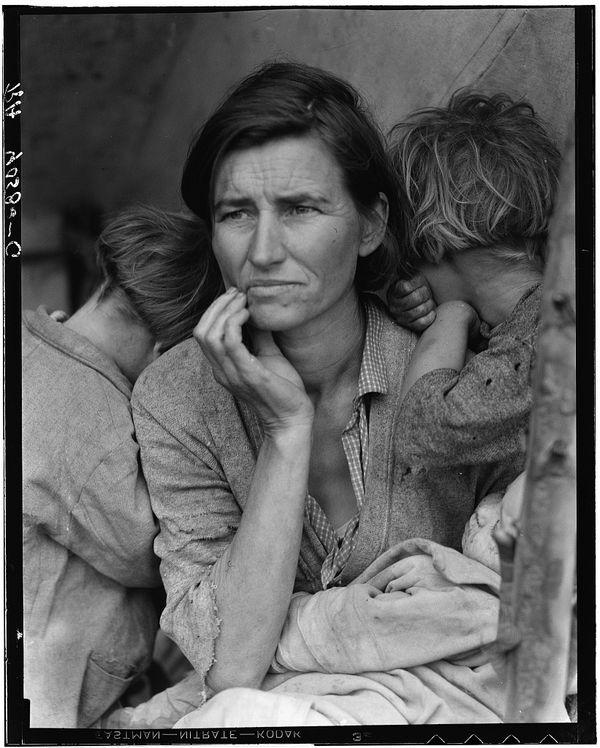
photo “Migrant mother”, Dorothea Lange, 1936.

On Business Viability and Human Dignity: Questions for Reflection

The following questions emerge from and refer back to the arguments made in my article When Business “Viability” Comes at Human Cost. They highlight the key ethical issues the article addresses.


On Work and Human Dignity

  • What does it say about us that we accept, and even expect, that certain kinds of work will not support the people who perform it?
  • Do we truly believe that all work has dignity if some work is structured in a way that makes survival difficult?
  • Is it ever justifiable to treat people as disposable means to an end in a market economy?

On Business Viability and Responsibility

  • Should a business be considered viable if it can only survive by paying workers less than they need to live?
  • Who truly bears the costs when wages are too low—workers, taxpayers, communities, or businesses themselves in the long run?
  • What might happen if we expanded our definition of business success beyond just profitability?

On Power and Decision-Making

  • Who decides what counts as a “fair” wage, and on what basis?
  • Why do we treat investors as knowingly taking risks but not low-wage workers? Should workers have more access to financial transparency?
  • What role do consumers play in shaping wage structures through their purchasing decisions?

On Economic Assumptions and Possibilities

  • What economic assumptions underlie the idea that raising wages threatens business viability?
  • What innovations or adaptations might emerge if businesses could no longer rely on below-living wages?
  • How have past labor reforms—such as the end of child labor or the 40-hour workweek—challenged and ultimately reshaped economic expectations?
  • Are we truly choosing between low-wage jobs or no jobs at all, or are there other options we have yet to fully explore?

On Ethics and Social Responsibility

  • What does fairness look like in an economic community?
  • Do businesses have an obligation to contribute to the social well-being of the context in which they operate? If so, how should that be defined?
  • How should we balance individual responsibility (workers negotiating wages, businesses seeking profit) with collective responsibility (ensuring a just economic system)?